
A Divine Promise: The Origin of Hope Foundation
Hope Foundation was born out of a moment of deep despair and an extraordinary promise. After retiring from the Indian Army in 1980 following a distinguished career, Major S. K. Lamba was poised to begin a promising new professional journey. But fate had other plans. The organisation that had persuaded him to take premature retirement reneged on their offer, leaving him stranded—jobless, nearly penniless, and with a family of five to support.
At the lowest point in his life, alone and uncertain, Major Lamba turned to God in desperation. He made what he calls a Divine Deal — he pleaded for divine help and, in return, promised to dedicate his life to serving the less fortunate. The response was swift. Civil engineering contracts began to come his way, and his business slowly flourished.
True to his word, he began fulfilling his end of the sacred bargain. Aware of the dire lack of medical facilities for the poor, he decided to start a free medical clinic, despite having limited funds, no infrastructure, and no space. So committed was he to this cause that he began running the clinic from his own home—much to the bewilderment of his wife and neighbours.
Word spread quickly. Patients began arriving from the very first day, overwhelming the two doctors he had hired. It became clear that a new space was urgently needed. After much effort, the Principal of St. Joseph’s School at R.C. Church graciously offered him a room on the premises.
Thus, the Shri Dinanath Lamba Charitable Dispensary, named in honour of his late father, was established. It opened its doors to the poor, offering free consultations and medicines—a tradition that continues to this day with a dedicated doctor and two assistants attending to patients daily.
In 1984, this effort was formally institutionalised as the Hope Foundation, with Major Lamba and his wife as its first trustees. Over time, their sons also joined as trustees. Today, Major Lamba continues to lead and manage the Foundation with unwavering dedication, embodying the spirit of selfless service that gave birth to it.
(Adapted from the Times of India, October 30, 2001: “How Major Lamba Repaid His Divine Debt”)
Introduction
1. Hope Foundation is a registered charitable trust established under the Bombay Public Trust Act, 1950, with Registration No. E-9915 dated 08.06.1984. The name “HOPE” is not just a symbol of optimism but an acronym that embodies our guiding principle: Help Other People Ever.
2. The Trust is also registered under Section 12A of the Income Tax Act (Reg. No. TR/23059 dated 16.06.1984), and donations to the Foundation are exempt under Section 80G (Order No. CIT(E)/BC/80G/806/2014-15 dated 18.12.2014).
3. We take great pride in being the first and original charitable organisation globally to carry the name “Hope Foundation.” All other entities using similar names have been established after ours.

Major Sarwan Kumar (Kuku) Lamba
Born in 1939 in un-divided India and educated initially in Lahore, Major S K Lamba’s early experiences during the Partition of India shaped his deep resolve to contribute positively to society. An alumnus of the National Defence Academy, he was commissioned into the Corps of Engineers (Bombay Sappers) and served with distinction before taking premature retirement from the Indian Army in 1980.
Academically, a Postgraduate from IIT Bombay, he also holds a Master’s Degree in Marketing Management from Jamnalal Bajaj Institute of Management Studies Mumbai.
A Life Dedicated to Philanthropy
Post-retirement, Major S K Lamba founded the Hope Foundation, a charitable trust dedicated to uplifting the under- privileged. A visionary in healthcare, he established a charitable dispensary at St. Joseph’s School, Colaba, which has provided free medical aid for the poor and needy for over 40 years. His pioneering School Health Program, introduced in 1985, was later acknowledged by UNICEF as a model for preventive healthcare.
A cancer survivor, he offers counselling at Indian Naval Hospital Ship Asvini in Mumbai providing hope and strength to others through his personal experiences and his inspiring booklet, Petals.
Crusader for Good Governance
A fearless advocate for transparency, Major Lamba played a pivotal role in exposing the Adarsh Housing Society Scam in Mumbai earning him recognition as one of India Today’s “New Freedom Fighters” in 2015.
Champion for Animal Welfare
As a former Honorary Animal Welfare Officer of the Government of India, Major Lamba has been deeply committed to the well-being of stray animals in Colaba’s Defence Area.
A Spiritual Seeker
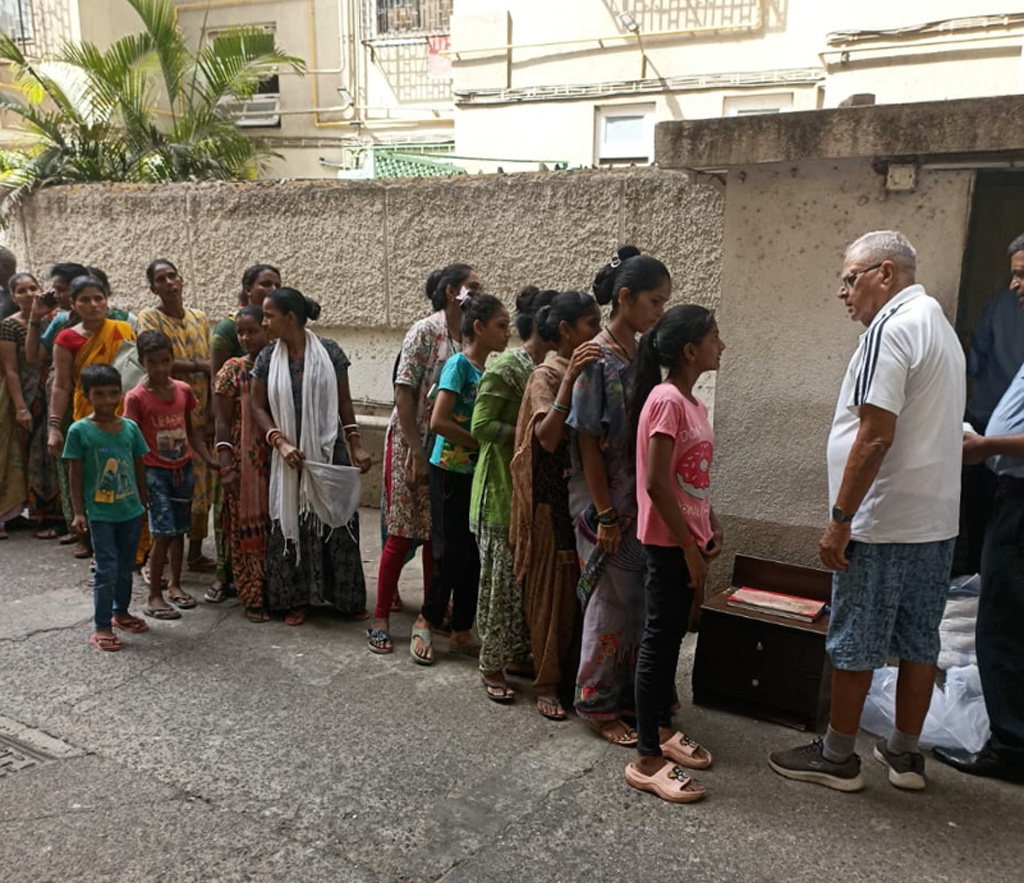
A devoted disciple of Sri Sathya Sai Baba, Major Lamba’s spiritual journey is a cornerstone of his life. He believes in Seva (Selfless Service) as a means to express divine love. He practices it by distributing dry rations (Anna Daan) to the needy on every Thursday.
Lifelong Commitment to Service
Beyond his own initiatives, Major Lamba actively supports NGOs like ADAPT (Able Disabled All People Together) and Cherish Life India Foundation, organizations dedicated to children with medical disabilities.
A Legacy of Compassion and Action
Major Lamba continues to lead by example—quietly, consistently, and courageously—showing us all that a life of service is a life well-lived.
Our Vision
To become one of the world’s most impactful charitable foundations, touching lives and transforming communities through love, compassion, and unwavering service—bringing Hope where it is needed most.
Our Mission
To live by the spirit of HOPE – Help Other People Ever — and to serve the underprivileged, the sick, and the forgotten with dignity, compassion, and care. . We believe that serving suffering humanity is the highest form of worship and every act of kindness rendered to another is service to God Himself.
Objects
1. To give relief to the poor in all manner possible
2. To give Medical Relief in all ways possible
3. To give Education in all ways possible
4. To give scholarships and other help by way of loan or otherwise howsoever of the advancement of education; primary, secondary, college or post graduate.
5. To help persons affected or incapacitated of any natural or other calamities including flood, famine and earthquake.
6. To start and support hospitals, health centres, maternity homes, or any other institutions for giving medical aid and/or assistant and also to construct and conduct Dharamshalas.
7. To give donations in cash or kind to any institution in parting scientific, technical, commercial and medical education; to any hospital health centre or any institution giving medical relief or assistance.
8. To contribute towards the holistic welfare and care of stray dogs and cats in all manners possible. (New being added)